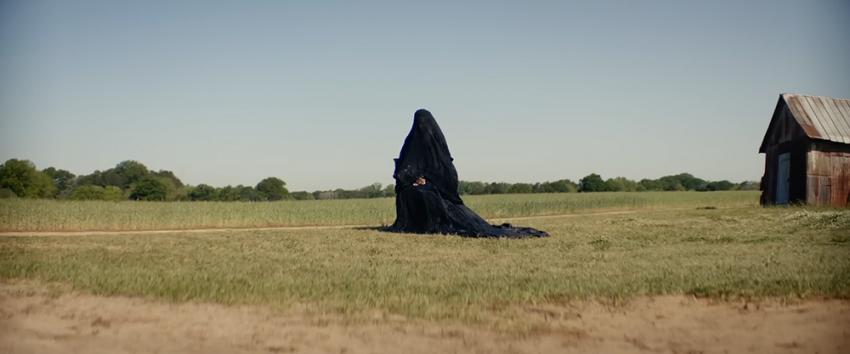
We're sure we weren't alone in having high expectations for The Woman in the Yard (2025), but even modest hopes couldn’t prepare us for how disappointing the movie turned out to be. We’re not sure what’s going on over at Blumhouse Productions lately, but Jason Blum should have summoned a quality-control exorcism before slapping the company’s name onto this one.
Danielle Deadwyler’s Romana is a widow drowning in grief, her life haunted by the ghost of a husband who’s left only fading memories in their hollowed-out home that she shares with their son, Taylor (Peyton Jackson), and daughter, Annie (Estella Kahiha). The emptiness stalks her as the movie opens with Ramona replaying an old video of their happier times together.

Between the character’s grief and moodiness, she hobbles along nursing a leg injury while dealing with her disobedient, rebellious son who challenges her authority, which adds an unnecessary unlikeability, making the story feel weighed down. It pins all its hopes on the black-clad woman in the yard to bring something to the table. But does this shadowy figure deliver? Spoiler: don’t hold your breath.
As Romana confronts the mysterious woman, played by Okwui Okpokwasili, who looms over the yard like a dark omen. The woman’s opening line, “How did I get here?” and cryptic messages like “Today’s the day” hint at a deeper mystery unfolding before us, but the back-and-forth dialogue feels dull and underwhelming. Despite efforts to characterize the woman’s voice with a distractingly weird, slightly robotic tint, almost as if inner demons are trying to get out, it fails to spark any real excitement or get the ball rolling.
Desperate to shoo away the front yard’s unwelcome guest, Romana tosses out hollow threats, claiming her late husband David, is about to stroll through the door or that the cops are just a phone call away, only to limp back inside her rural farmhouse in defeat. Much like Romana’s unsuccessful efforts, the whole setup and vibe ultimately fail to resonate.
Romana’s breezy dismissal to her kids that it’s just some nursing-home escapee is a far stretched comical lie, especially when you imagine this mysterious figure hauling a fancy antique chair through the sweltering heat to casually plant herself in front of their house like it’s no big deal.
Directed by Jaume Collet-Serra, known for horror titles such as House of Wax and Orphan, we had hoped the execution would have been better. The whole gimmick of the woman sitting in the yard feels like a random attempt to add something “unique” just to put bums in seats, hoping the image alone could carry the movie, when in reality, it barely serves any further purpose. The yard woman is relegated to the sidelines for most of the runtime, as if she’s just there to hold up the creepy aesthetic.
It’s further hindered by being told in the most confusing and messy way imaginable. After all, why bother with a simple, linear, and straightforward narrative when you can jumble an already weak plot and leave the audience bewildered in the process.
It plays like two separate stories: the broken family inside the house, dominated by Romana’s survivor’s guilt, visions, and flashbacks that quickly become tedious. A mere 10–15 minutes at the start to properly show the family’s life before the death of her husband and the car accident could have anchored these scenes with meaning.
Instead, we’re left slogging through it all, disconnected and unmoved, while the woman in the yard lingers on the edge of it all and doesn’t truly become involved until near the end, by which point you’ve more than likely stopped caring all together anyway.