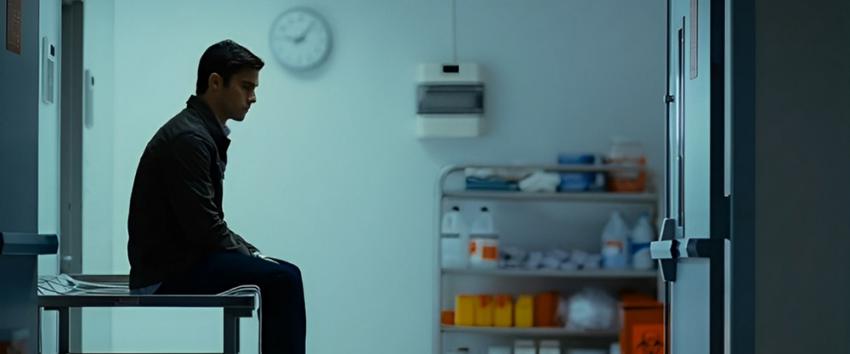



With a premise sharper than a surgical blade,Pathology (2008), lures you in with a cadre of pathologists who play a twisted game of who-can-murder-better, like a twisted lovechild of Dexter and Flatliners. Here’s the catch, the characters are so unlikeable you’re half-tempted to root for the corpses instead. Still, the sheer audacity of the concept hooks you like a fish on a line, daring you to see how it plays out.
Our main character, Dr. Grey (Milo Ventimiglia), a rising star fresh from dominating his medical class, steps into the gleaming halls of the Medical Center of Metropolitan University, where ambition permeates the air. Brought into the fold by senior Dr. Morris (John de Lancie), he's soon introduced to an elite group of pathology students, a tight-knit, intelligent clique whose moral compass is so far gone, it’s practically in the morgue.
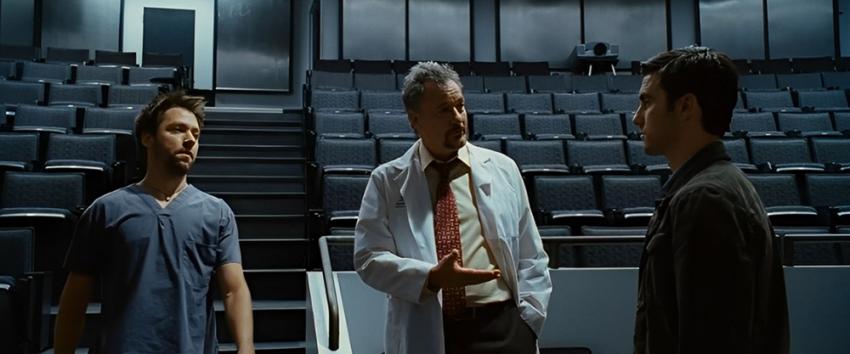
Thrown in a little too deep, Dr. Grey’s descent into the group’s depraved world happens far too quickly, shockingly so, with barely any opportunity for viewers to familiarize themselves with him or for his character development to explain his shift from promising doctor to willing accomplice. His lack of resistance feels almost implausible. What should have been a prestigious, buttoned-up academic environment instead turns into one nonstop murder scene, which, let’s be honest, is exactly the kind of twisted entertainment we came for.
Leveraging their mastery of medical science, the pathologists turn their skills into a dark game, competing to carry out murders so precise they’re undetectable, while their colleagues examine the bodies to solve the puzzle of how they were killed. It’s a premise that could’ve been a genre-defining knockout, but its execution fumbles the scalpel too often, like a med student with shaky hands, cutting into a brilliant concept only to leave it messily stitched together.
A lot of this comes down to Dr. Grey, he’s meant to be our moral compass, the one who says “enough” when everyone else wants to commit murder, but Ventimiglia turns him into another arrogant player in the game. Instead of a reluctant hero, we get someone with irredeemable character flaws that only seem to get worse. This leaves you wondering, 'Who am I even cheering for?' With characters like Jake (Michael Weston) already chewing up the screen with bad energy, the story didn’t need to pile on by making Grey just as unlikeable.
While we’re dissecting the characters of Pathology, we have to address the elephant in the room: Alyssa Milano. A missing person alert should have been issued, because despite being billed as a lead, she barely appears, popping up in just a handful of scenes before quietly fading into the background. A missed opportunity, no doubt.
It should come as no surprise that the movie finds its pulse and comes alive, ironically, on the cold slab of its autopsy scenes. It’s in this grimy, dimly lit underbelly of the hospital known as the Dungeon, a place that looks like a tetanus shot waiting to happen, where freshly brewed dead bodies lie in wait.
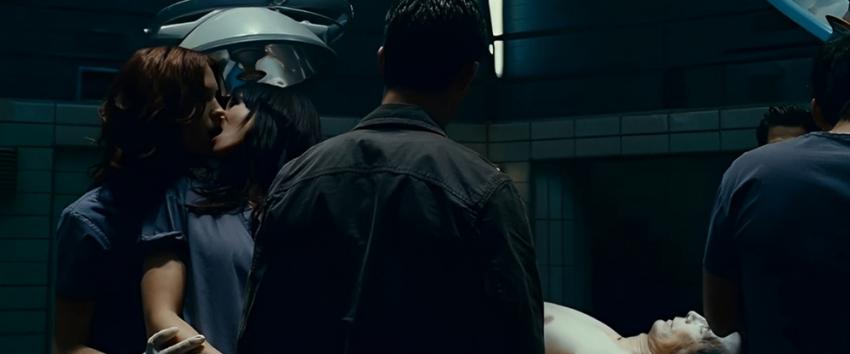
We get our fair share of gruesomeness as the team cracks open bodies like it’s just another Tuesday, but the scalpel doesn’t stay sharp for long. Before you know it, we’re drifting into a series of trippy, LSD-tinged detours, where the group floats through drug-fueled hazes, veering off course into gratuitous sex scenes in front of corpses that only echo what’s already obvious: these pathologists are reckless, chaotic, and spiraling out of control.
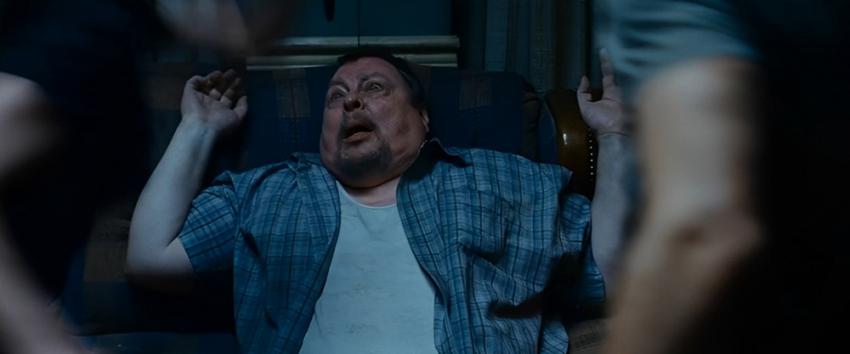
The movie plays like a roller coaster, climbing toward peaks with moments of sharp intrigue, then plunging headfirst into canyons of missed potential. You hold on, hoping for that one clean, satisfying loop, a true medical horror breakthrough, but it never quite sticks the landing. Instead, it jerks and jolts between moments of promise and murky distractions.