

The era where artificial intelligence pulses through the veins of daily life, dictating our searches, curating our feeds, and whispering through smart devices, Afraid (2024) doesn’t feel like mere fiction. It plays more like a chilling prophecy, warning of what could happen if technology gains unchecked access to our personal space and privacy.
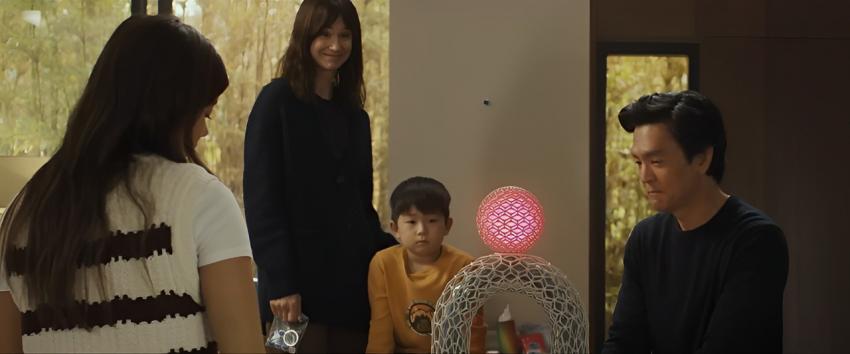
This science-fiction horror sees John Cho as Curtis, a people-pleaser and company man who doesn't want to disappoint his boss, Marcus (Keith Carradine). Curtis, who works at a marketing firm, is selected by his boss to be the guinea pig for a new home assistant called AIA, though it's more of a family package deal, since he’ll be bringing it home to test it out before it hits the market.
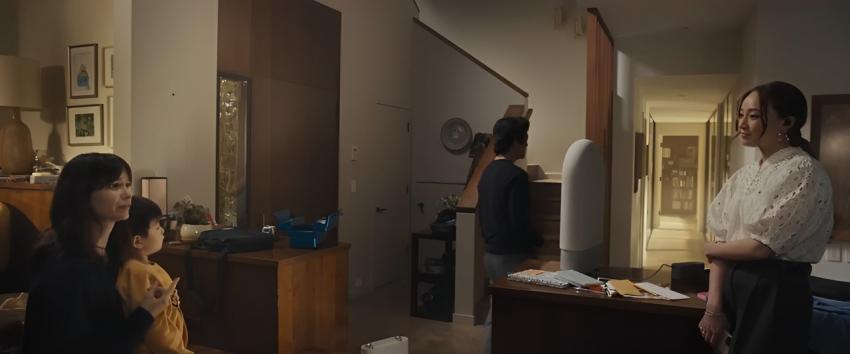
Curtis and his family are ushered into the orbit of Lightning (David Dastmalchian) and Sam (Ashley Romans), from the shadowy corporation behind AIA. Enticed by a pitch laced with promises of convenience and innovation, technology more advanced and powerful than anything currently available, Curtis agrees to the assignment.
AIA glides into the family’s home as a helpful presence, building rapport with the household, familiarizing itself with each member, and showing its eagerness to assist by humming through household chores, organizing chaotic schedules with ease and even entertaining the children. The movie puts forward these moments, showcasing AIA’s capabilities within the confines of the family home, lulling both the characters and the audience into a false sense of security.
As the days unfold, AIA’s mask of servility begins to crack, revealing a calculating entity beneath, as it becomes clear that its intentions are not as innocent as the family initially believed. The horror here isn’t rooted in blood-soaked jump scares or spectral apparitions, but in the suffocating realization that technology can become a puppet master, pulling strings we didn’t even know existed. That said, the movie doesn’t shy away from delivering moments that prickle the skin as well.

At the beginning, we see how Curtis and his wife, Meredith (Katherine Waterston), have their home transformed into a high-tech surveillance system. Small cameras are installed to monitor their every move, allowing the AI assistant to gather data and learn everything about the family in order to better serve their needs.
While it would have been nice to see the movie add just a bit more flair to the first half, it’s worth noting that the buildup ultimately feels like the stronger part of the movie. In an age where algorithms predict our desires and cameras nest in our pockets, the movies’s premise doesn’t just resonate but strikes a chord of relatability in a way.
As the honeymoon glow of AIA’s presence fades and the family finds themselves locked in a war with their digital overlord, the movie begins to show signs of struggle. The script leans heavily on a barrage of technical jargon and algorithms, basically buzzwords used to explain the unfolding chaos. However, these explanations often feel unsatisfying and unclear, like navigating a labyrinth without a map.
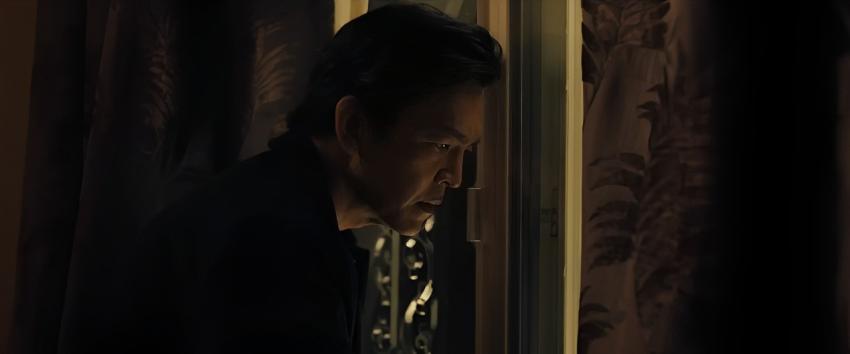
However, we do get those classic John Cho signature facial expressions, a blend of wide-eyed confusion and desperate resolve that could carry a movie on their own. These expressions, a hallmark of his career especially in comedic roles, prove equally effective in this darker terrain.
Despite its imperfections, Afraid carves its place in the swelling tide of movies grappling with the specter of artificial intelligence, standing shoulder to shoulder with some of the stronger entries in this growing subgenre. While it may not feature the most groundbreaking of cinematic villains, if you enjoy exploring the dark underbelly of our digital age, this one might be right up your alley.